
Last updated September 25, 2026
DIY vs Professional ADU: The Hemet Homeowner’s Decision Guide
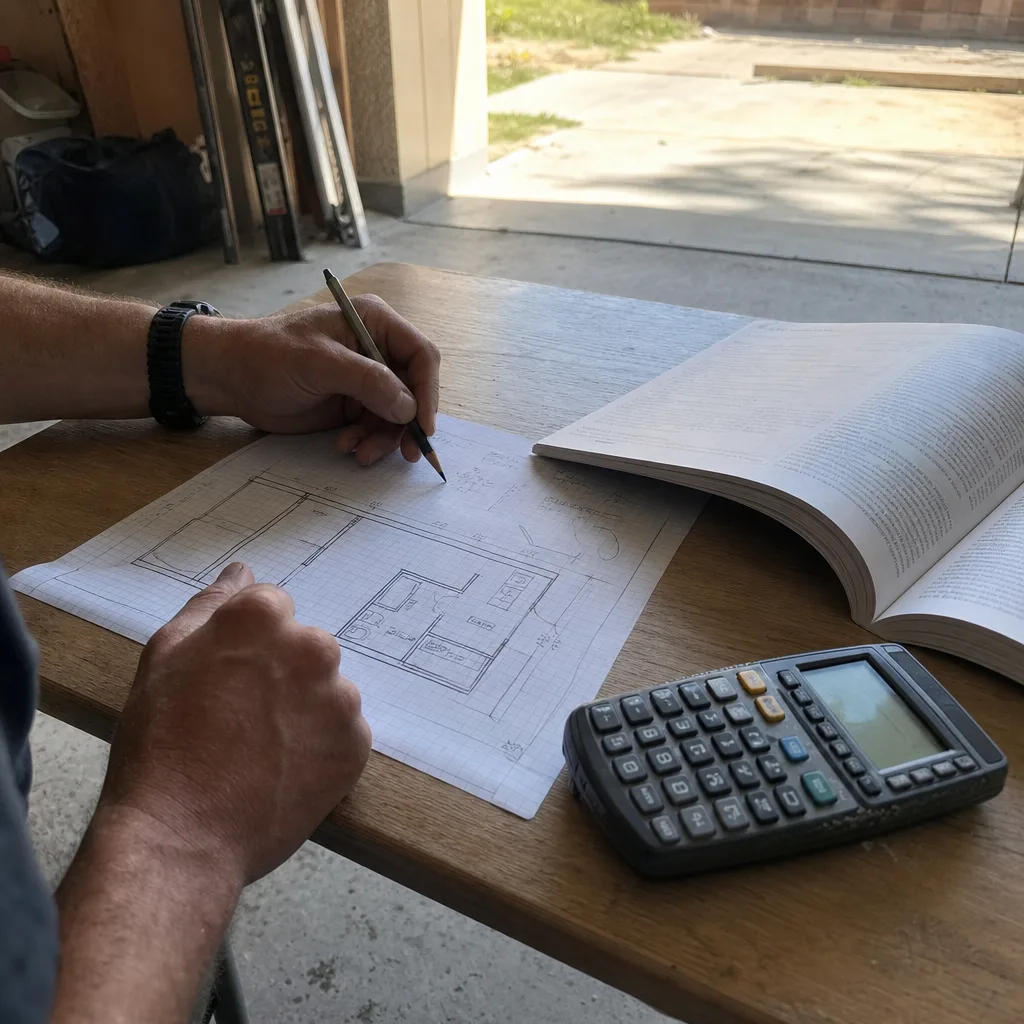
California law permits homeowners to act as their own general contractor for structures they intend to occupy. But here’s the detail most Hemet homeowners miss: that owner-builder exemption under Business and Professions Code §7044 voids the moment you rent the ADU to anyone else. A Hemet homeowner who pulls their own permit, builds the unit, then leases it to a tenant has created what Riverside County courts treat as unpermitted-equivalent construction. If a fire, structural failure, or injury occurs, personal liability attaches directly to the owner, not to a licensed contractor’s insurance pool. In this guide, we’ll separate what you can legally self-perform from what turns your ADU into an uninsurable liability in Hemet’s specific regulatory environment. For how to hire an ADU contractor in Hemet: a step-by-step guide, see our companion resource.
Quick Answer
Most Hemet homeowners can safely handle finish painting, landscaping, cabinet installation, and some fixture work on their own ADU. The permit, structural work, electrical panel modifications, gas lines, and any fire-hazard-overlay compliance must be performed by licensed trade contractors or the owner-builder exemption is void and the structure becomes personally liable. The true cost difference between DIY and professional construction in Hemet typically disappears after accounting for plan check correction cycles, material waste, and reduced appraised value from incomplete documentation.
Table of Contents
- The Owner-Builder Exemption: What California Law Actually Allows
- What Hemet Homeowners Can Legally Self-Perform
- Licensed Trades Required Regardless of Owner-Builder Status
- The Hidden Cost of DIY Permit Sets in Hemet
- Calculating True DIY Savings: Three Factors Most Guides Ignore
- Prefab and Modular Systems: Where DIY Ends
- Insurance and Appraisal Risks of Incomplete Documentation
- Common Mistakes to Avoid
- When to Call a Professional
- Frequently Asked Questions
- The Bottom Line
The Owner-Builder Exemption: What California Law Actually Allows
Business and Professions Code §7044 lets California homeowners pull building permits without a general contractor’s license, provided they personally perform the work or hire licensed subcontractors for trade-specific tasks. The exemption applies only to structures the owner intends to occupy. Rent the unit, and the exemption collapses.
This matters in Hemet more than in many California cities. Hemet’s median home price sits below the state average, which makes ADU rental income attractive as a long-term wealth strategy. We’ve talked with Hemet homeowners who planned to build an ADU for aging parents, then later rent it. That later rental voids the exemption retroactively if the original permit was pulled under owner-builder status. Riverside County has seen litigation where insurers denied claims specifically because the owner-builder exemption was violated by subsequent rental use.
The exemption also requires the owner to reside in the primary dwelling during construction. If you’re building an ADU on a Hemet rental property you don’t occupy, you cannot legally use the owner-builder path at all. The City of Hemet’s building division will ask this question on the permit application. Answer incorrectly, and you’ve committed perjury on a government document.
Even when the exemption applies, it does not exempt the owner from any code requirement. Hemet adopts the California Residential Code with local amendments, including specific seismic detailing for the San Jacinto Fault zone. The owner-builder must produce permit drawings that satisfy Hemet’s plan checkers, pull all required trade permits, and schedule inspections in the correct sequence. Miss an inspection, and the work must be exposed for re-inspection at the owner’s cost.
What Hemet Homeowners Can Legally Self-Perform
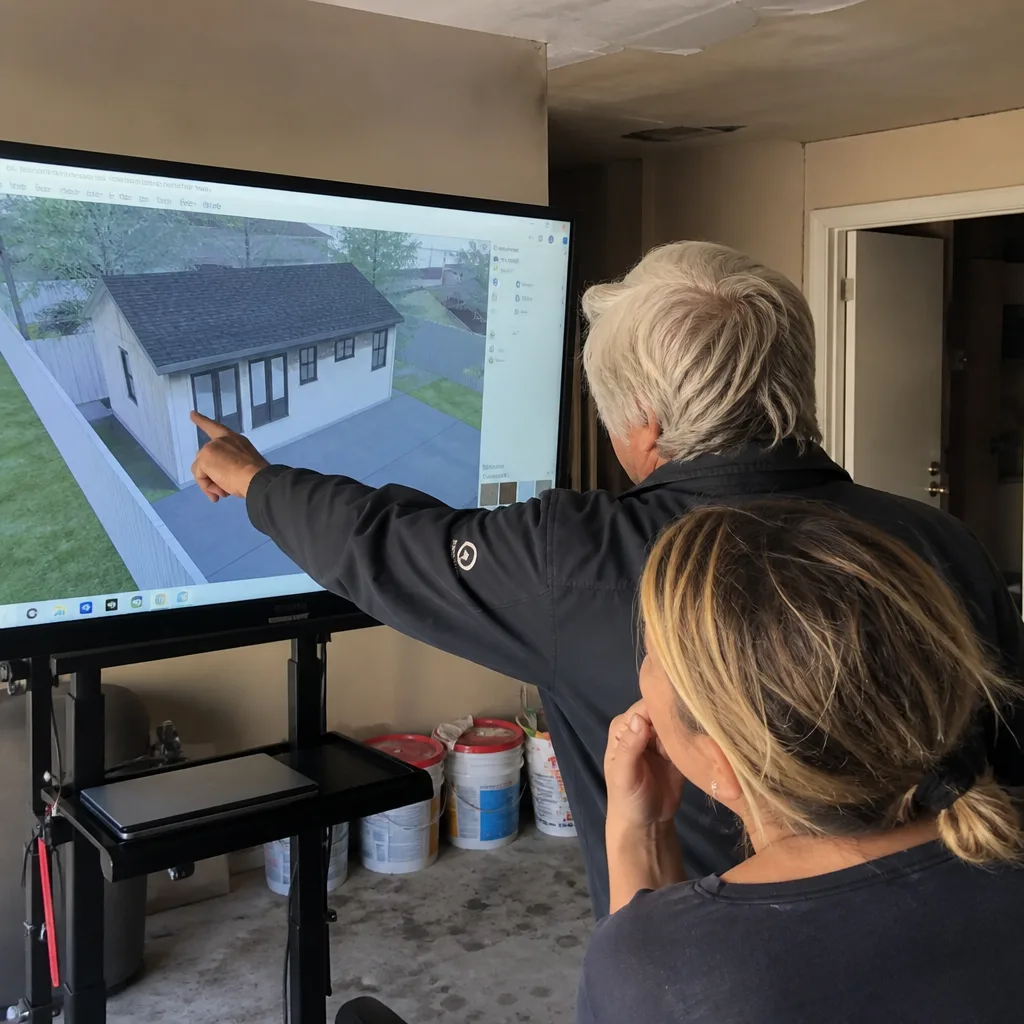
Within a permitted project, certain tasks present minimal liability risk and require no specialized license. These are the areas where DIY savings are real and defensible.
- Finish painting and staining. Interior and exterior paint work falls outside California’s contractor licensing requirements. The critical constraint: painting must occur after final inspection of the surfaces being painted. Paint drywall before the drywall inspection, and you’ll be cutting patches for the inspector to see fastening patterns.
- Landscaping beyond the building footprint. Grading, planting, and irrigation outside the structure’s footprint typically require no permit in Hemet. Within the footprint, any work affecting drainage or setback compliance needs review.
- Cabinet and vanity installation (non-structural). Cabinets that do not bear structural loads and do not modify plumbing rough-in locations can be owner-installed. Modify the plumbing stub-out location, and you’ve entered licensed plumbing territory.
- Fixture installation on existing rough-ins. Installing a toilet on an existing flange, a faucet on existing stops, or a light fixture on existing boxes stays within owner-builder scope. Moving the box or the valve requires the respective trade license.
- Finish flooring over approved subfloor. LVP, tile, or carpet over a subfloor that has passed structural inspection is owner-performable. The subfloor itself, and any leveling compound that affects threshold heights, is not.
The inspection sequence matters more than the task itself. Hemet’s building division follows the standard California sequence: foundation, framing, rough mechanical/electrical/plumbing, insulation, drywall, final. Each trade inspection must pass before the next trade covers work. An owner-builder who installs cabinets before the plumbing rough-in inspection has concealed work that must now be exposed.
In Hemet’s dry climate, we’ve also seen owner-builders handle their own drought-tolerant landscaping with native plants. This saves labor cost and aligns with Riverside County’s water conservation requirements. The savings are modest, $2,000-$4,000 on a typical project, but they’re real and low-risk.
Licensed Trades Required Regardless of Owner-Builder Status
California law mandates licensed contractors for specific trades, and Hemet’s location within Riverside County adds additional layers. These restrictions apply even to owner-builders who fully qualify for the §7044 exemption.
- Electrical panel work and new service. Any modification to the main electrical panel, new service from the utility, or addition of subpanels requires a C-10 licensed electrician. Hemet’s summer heat loads mean most ADUs need service upgrades that owner-builders cannot legally perform. Southern California Edison requires the electrician’s license number on the service request.
- Gas line installation and modification. New gas lines, meter upgrades, or appliance connections require a C-36 licensed plumbing contractor. In Hemet’s fire hazard overlay zones, which cover significant portions of the city east of State Street, gas work also requires fire clearance inspection from Riverside County Fire. The owner-builder cannot pull that fire clearance; the licensed contractor must.
- Structural work and seismic detailing. While an owner-builder can physically frame walls, the engineering calculations and special inspections for the San Jacinto Fault zone require a licensed structural engineer. Hemet’s plan checkers flag incomplete seismic details more consistently than many neighboring cities.
- Fire-hazard-overlay compliance. Hemet properties within the Very High Fire Hazard Severity Zone, mapped by Cal Fire and adopted by Riverside County, require ignition-resistant construction, defensible space compliance, and fire department inspection. The owner-builder cannot self-certify these; they require a licensed contractor’s documentation and the fire inspector’s sign-off.
- Septic and sewer connections. Properties outside Hemet’s sewer service area, common in the unincorporated pockets and older neighborhoods near the Santa Rosa Hills, require septic system modification. This requires a C-42 licensed contractor and Riverside County Environmental Health approval.
We’ve reviewed owner-builder projects in Hemet where the homeowner performed their own framing, then discovered the property sat within a fire hazard overlay. The fire inspector required ignition-resistant siding, which the homeowner had already installed incorrectly. The correction cost exceeded what professional installation would have cost initially.
The Hidden Cost of DIY Permit Sets in Hemet
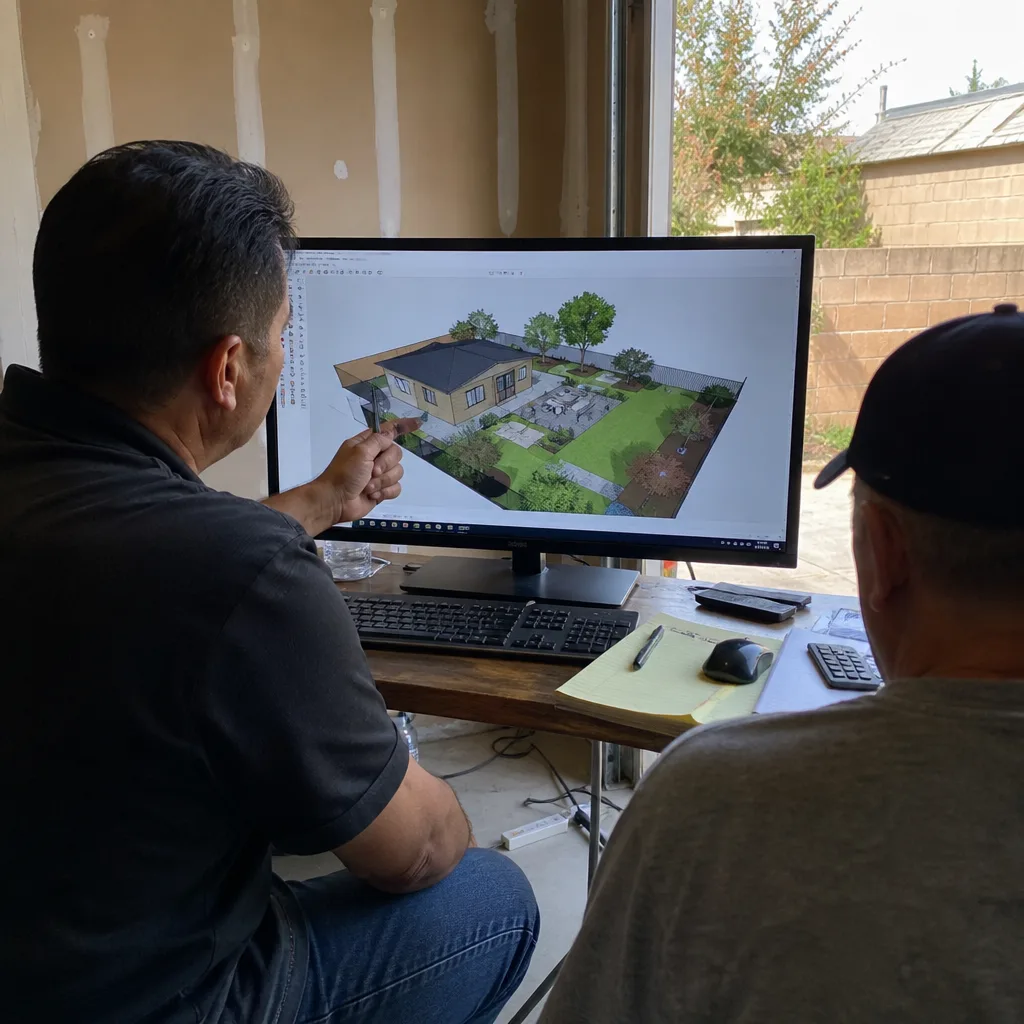
The permit set, not the construction, is where most Hemet DIY ADU projects founder. City of Hemet’s plan check process for ADUs involves structural, energy, and Title 24 compliance review. Each correction cycle costs time and money that DIY guides rarely disclose.
Hemet’s plan check correction rate for homeowner-prepared ADU drawings runs approximately 60-70%, based on our direct experience and conversations with plan check staff. Professionally prepared drawings from design-build studios with established Hemet relationships typically see correction rates below 15%. The difference is not talent; it’s familiarity with Hemet’s specific interpretation of California’s ADU code amendments.
Each resubmittal cycle in Hemet carries direct and indirect costs:
- Plan check fees: Hemet charges for each resubmittal after the first correction cycle. While the base ADU plan check fee is modest, multiple cycles accumulate.
- Schedule delay: Each resubmittal restarts the plan check queue. In busy periods, this adds 2-4 weeks per cycle. Three correction cycles can push a project from spring to fall, missing the optimal construction window before Hemet’s winter rain season.
- Financing costs: Construction loans and HELOCs accrue interest during delay. A $150,000 construction loan at 8% costs roughly $1,000 per month in interest alone. Three months of plan check delay is $3,000 in carrying cost that professional drawings would have avoided.
- Design revision labor: Homeowners who prepared their own drawings must now revise them. If they hired a drafter for the initial set, that drafter may charge hourly for revisions, or may lack the expertise to address Hemet’s specific corrections.
The total cost of a typical three-cycle DIY permit correction in Hemet, including fees, carrying costs, and revision labor, typically ranges $4,500-$8,000. This approaches or exceeds the cost of professional permit drawings from a studio with established Hemet relationships. And it assumes the homeowner eventually succeeds; we’ve seen projects abandoned after five correction cycles when the homeowner’s drafter could not resolve structural engineering comments.
ADU Design & Permitting in Hemet requires familiarity with local amendments that change periodically. Hemet updated its ADU ordinance in 2020 and again in 2023, adjusting setback and height limits. A permit set prepared from online templates predating these changes will be rejected regardless of drafting quality.
Calculating True DIY Savings: Three Factors Most Guides Ignore
The headline savings of DIY construction, typically quoted as 20-40% off professional pricing, rarely survive contact with reality in Hemet’s market. Three specific factors erase most or all of that margin.
Factor One: Permit Correction Delays
As detailed above, DIY permit sets face correction cycles that professional sets avoid. Quantify this explicitly for your project. If professional permit drawings cost $6,000 and DIY drawings cost $1,500, but the DIY path adds three months of financing carry and two resubmittal fee cycles, the net cost may favor professional preparation. We provide written pricing for permit sets before any work begins, per Haven Standard Clause 1, so this comparison is available upfront.
Factor Two: Material Waste from Inexperienced Installation
Professional contractors in Hemet order materials with waste factors based on actual installation experience. Owner-builders typically over-order to avoid shortages, then lack the relationships to return surplus. We’ve reviewed projects where the homeowner purchased 20% excess framing lumber, then stored it in Hemet’s dry heat until it warped beyond use.
More significantly, incorrect installation often requires removal and replacement. A homeowner who installs waterproofing incorrectly behind a shower surround may not discover the error until moisture appears in the wall cavity. The remediation cost, including mold abatement common in Hemet’s older homes with original ventilation, typically exceeds the original installation cost by 3-5x.
Factor Three: Reduced Appraised Value from Incomplete Documentation
This factor is invisible until sale or refinance. An ADU with incomplete permit documentation, missing inspection sign-offs, or owner-builder work without proper trade permits appraises as non-conforming space. Lenders may refuse to count ADU rental income in debt-to-income calculations. In Hemet’s market, where ADU rental income often supports the owner’s mortgage qualification, this can reduce the property’s financeable value by $30,000-$80,000.
Professional construction with complete documentation, including the photo record we provide on every visit, creates an asset that appraisers and lenders recognize. The Ellery ADU Studio Hemet home process includes documented evidence at each inspection milestone, not just a final certificate of occupancy.
For a typical 500-square-foot garage conversion ADU in Hemet, the nominal DIY savings of $15,000-$25,000 frequently shrink to $3,000-$7,000 after these three factors, while carrying significantly higher liability risk. The calculation reverses entirely for larger detached ADUs where permit complexity and material volumes amplify all three factors.
Prefab and Modular Systems: Where DIY Ends
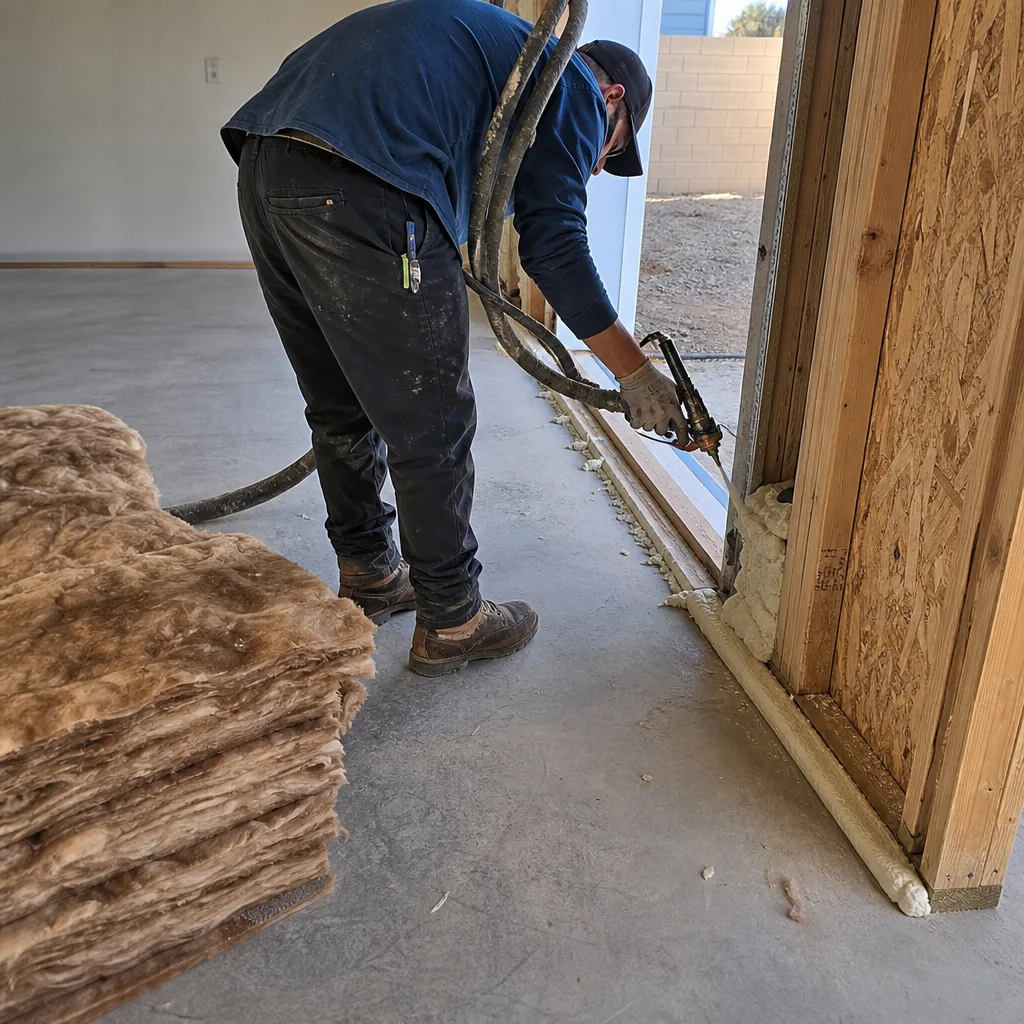
Prefab and modular ADU systems, including Boxabl, Plant Prefab, and Tuff Shed structures adapted for residential use, present a special case. The manufacturing is factory-performed, but site preparation, foundation, utility connection, and final assembly remain location-specific.
In Hemet, we’ve specified and coordinated systems from these manufacturers within our single-contract design-build model. The critical point for DIY consideration: factory certification does not substitute for local permit compliance. A Boxabl unit shipped with UL listing and factory engineering still requires Hemet plan check of the foundation design, seismic anchorage to local soils, and utility connection permits. Plant Prefab’s DfMA (Design for Manufacturing and Assembly) documentation must be supplemented with Hemet-specific site plans showing compliance with local setback and fire-access requirements.
James Hardie siding, common on Tuff Shed conversions and site-built structures alike, requires specific fastening patterns in Hemet’s wind exposure zone. The manufacturer’s written installation guide differs from Hemet’s amended requirements. An owner-builder following only the manufacturer’s guide will fail inspection.
The DIY appeal of prefab is speed of enclosure. The reality in Hemet is that factory delivery schedules, foundation cure times in our climate, and the sequential inspection process mean the total timeline advantage over site-built construction is typically 2-4 weeks, not the months often advertised. That modest advantage disappears if the owner-builder lacks experience coordinating factory delivery with site readiness, a common failure point we’ve observed.
Garage Conversion ADU in Hemet projects, by contrast, often proceed faster than prefab detached units because the foundation and utility stub locations are already established. The DIY temptation is lower because the structural modification of an existing garage requires engineering that owner-builders rarely possess.
Insurance and Appraisal Risks of Incomplete Documentation
The liability exposure of DIY ADU construction extends decades beyond project completion. We’ve reviewed Hemet properties where owner-built ADUs from the 1990s now complicate sales because documentation was never completed.
Homeowner’s insurance policies contain standard exclusions for unpermitted or improperly permitted structures. An owner-builder who violated the §7044 rental-use condition, or who performed electrical work without a C-10 contractor, faces potential claim denial if fire or injury occurs in the ADU. The personal liability is not limited to the ADU’s value; it extends to casualty damages, legal defense, and in extreme cases, punitive findings if the permitting violation is deemed willful.
For appraisal, Fannie Mae and Freddie Mac guidelines require “legal, permitted” accessory dwelling units for rental income to count in qualification. An ADU with gaps in its permit history, even if physically sound, may be classified as “storage” or “bonus space” by a conservative appraiser. In Hemet’s 2023-2024 market, we’ve seen this classification reduce comparable-adjusted values by $40,000-$60,000 on properties with 600-square-foot ADUs.
The documentation standard we apply, including the photo record provided on every visit and the 365-Day Done Right Promise, creates a paper trail that survives ownership transfer. When a future buyer’s lender questions the ADU’s provenance, the seller can produce dated photographs of each construction phase, inspection sign-offs, and a written warranty. This documentation has tangible value in the transaction.
Common Mistakes to Avoid
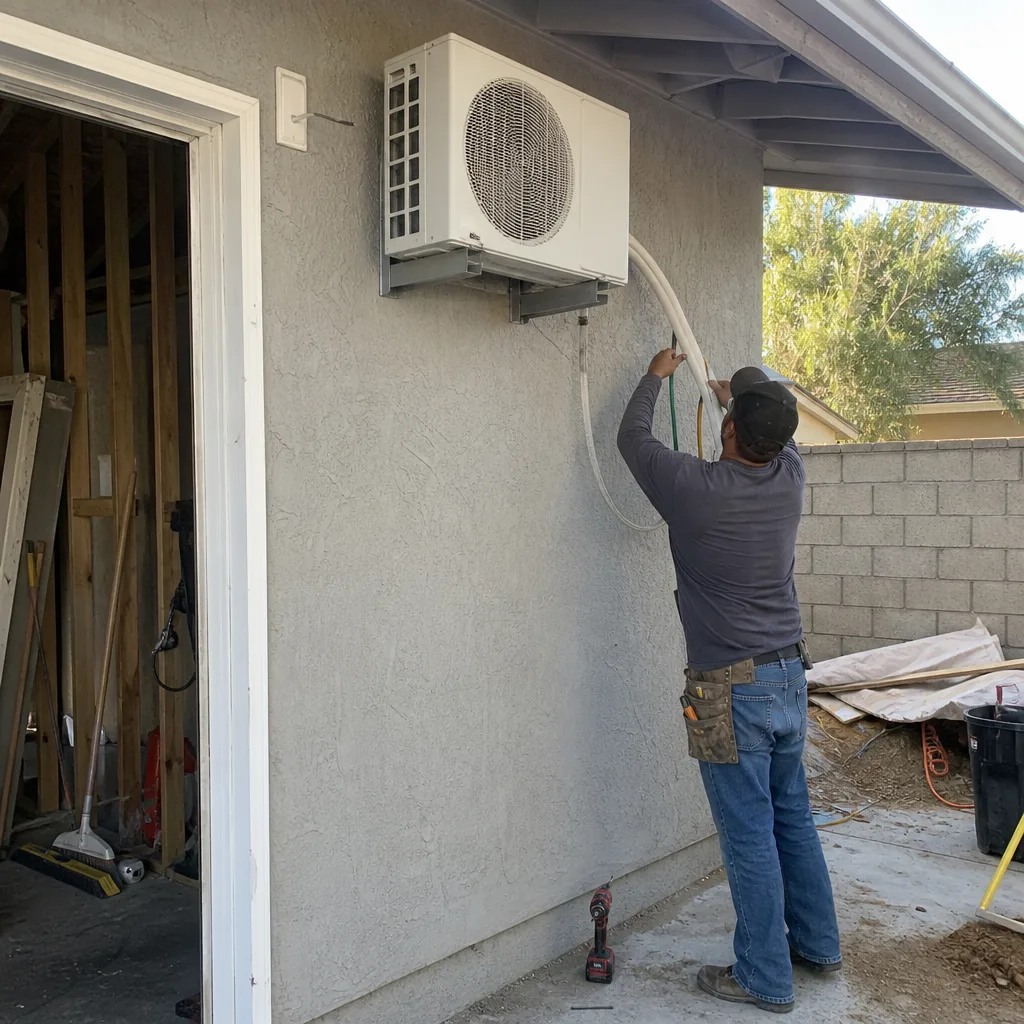
- Pulling an owner-builder permit with unstated rental intent. Hemet homeowners who intend eventual rental, even if initially building for family use, should structure the project through a licensed contractor from the start. The cost of correcting owner-builder status mid-project exceeds initial professional engagement.
- Performing electrical or gas work without licensed trade contractors. Beyond the legal violation, this voids homeowner’s insurance coverage for the specific work and may void coverage for the entire structure if the insurer determines the violation contributed to a loss.
- Using online permit drawings without Hemet-specific amendments. Template drawings from national ADU platforms rarely include Hemet’s local amendments, seismic detailing for the San Jacinto Fault zone, or Riverside County fire-hazard-overlay requirements. The plan check rejection is nearly certain.
- Skipping the fire department inspection in hazard overlay zones. East Hemet properties, including neighborhoods near the Santa Rosa Plateau, often sit within Very High Fire Hazard Severity Zones. The fire clearance inspection is separate from building inspection and cannot be bypassed.
- Installing finish materials before rough inspections pass. This is the most common DIY schedule error we encounter. The temptation to “get ahead” by installing drywall before the plumbing rough-in is signed off creates expensive rework when the inspector requires access to verify fastening patterns or pipe slope.
- Failing to document the construction process photographically. Without dated photographs of each phase, future owners cannot prove compliance to insurers or appraisers. The “it passed inspection” argument fails when the certificate of occupancy is lost or questioned.
- Underestimating Hemet’s summer construction constraints. July and August temperatures regularly exceed 105°F, limiting concrete pour windows and worker productivity. DIY projects that fall behind schedule in spring often face summer conditions that further delay progress, pushing into the winter rain season with incomplete weather protection.
When to Call a Professional
Call a professional when the project involves permit drawings, structural modification, electrical or gas work, fire-hazard-overlay compliance, or any intent to rent the completed unit. These are not preferences; they are legal and financial boundaries that DIY cannot safely cross in Hemet’s regulatory environment.
Ellery ADU Studio Hemet offers free estimates for homeowners evaluating their options. We’ll review your property’s specific conditions, identify any fire-hazard-overlay or seismic requirements, and provide a written price before any work begins. If you already have a written estimate from another provider, our Free Second Opinion will identify any gaps in scope or compliance. Call (951) 430-0167 to schedule.
New Detached ADU in Hemet projects, in particular, benefit from professional coordination of the full sequence from geotechnical evaluation through final inspection. The liability exposure of a detached structure, with independent foundation and utility service, exceeds that of attached or conversion projects.
Frequently Asked Questions
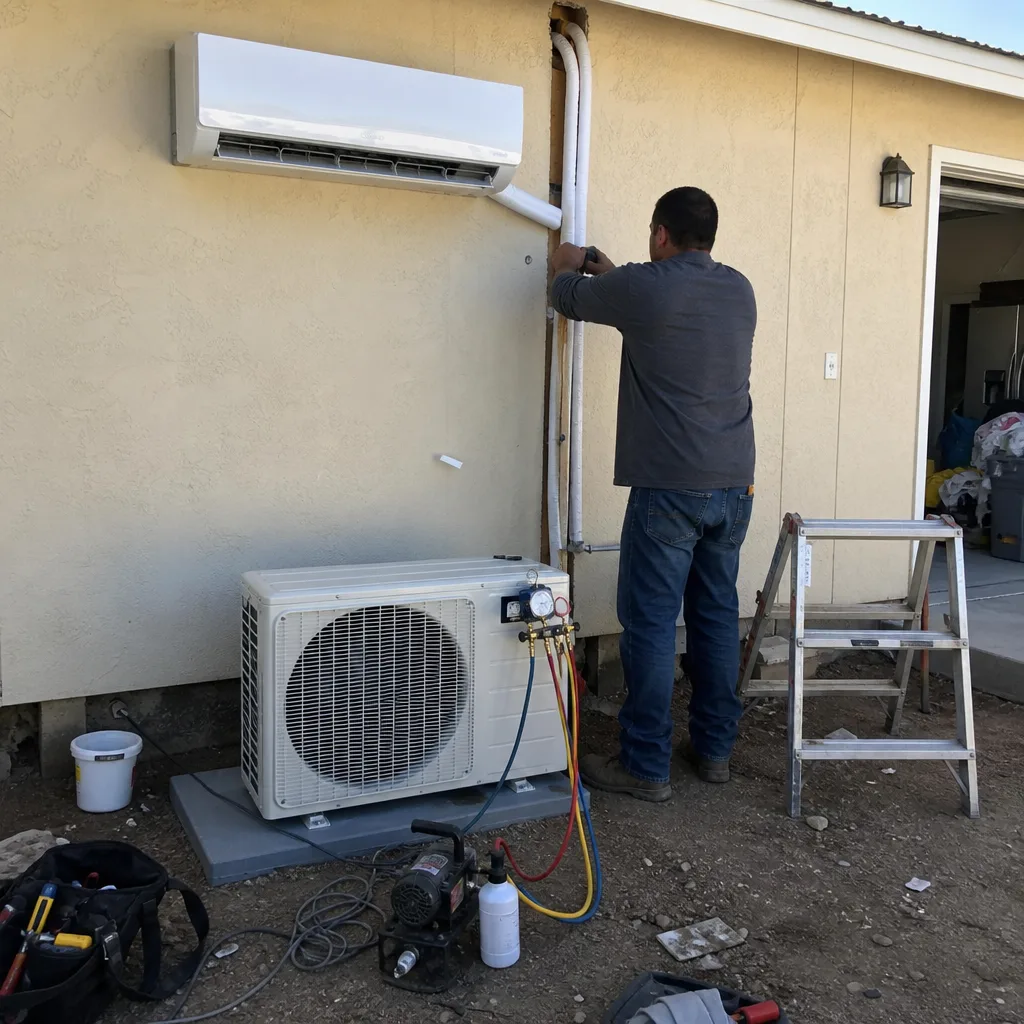
Professional garage conversion ADUs in Hemet typically run $85,000-$140,000 all-in, from permit drawings through final inspection, while new detached ADUs range $180,000-$320,000 depending on size and finish level. See our ADU cost breakdown: the Hemet homeowner’s reference for 2026 for detailed line-item pricing. DIY construction may reduce direct labor costs by 15-25%, but after accounting for permit correction delays, material waste, and reduced appraised value from incomplete documentation, the net savings typically shrink to 5-10% or disappear entirely. We provide written pricing before any work starts, per Haven Standard Clause 1, so you can compare actual numbers rather than estimates. Call (951) 430-0167 for a specific quote.
No. California’s owner-builder exemption under Business and Professions Code §7044 applies only to structures the owner intends to occupy. If you pull an owner-builder permit and later rent the ADU, the exemption voids retroactively and the structure is treated as unpermitted-equivalent construction for liability purposes. If rental is any part of your plan, engage a licensed contractor from the start.
Each correction cycle requires revised drawings, additional plan check fees, and re-queueing in Hemet’s plan check schedule. Three correction cycles are common for homeowner-prepared drawings, adding 6-12 weeks and $4,500-$8,000 in direct and carrying costs. Professionally prepared drawings from studios with established Hemet relationships typically pass in one or two cycles.
Yes. Any modification to the main electrical panel, new service from Southern California Edison, or addition of subpanels requires a C-10 licensed electrician. This applies regardless of owner-builder status. Hemet’s summer heat loads and modern electrical code requirements mean virtually all ADUs require service upgrades that only a licensed electrician can legally perform.
Standard homeowner’s policies exclude coverage for unpermitted work and work performed outside the owner-builder exemption’s conditions. If you perform electrical or gas work without licensed contractors, or if you rent an owner-builder ADU, your insurer may deny claims related to the ADU or, in extreme cases, rescind coverage for the entire property. Complete permit documentation and licensed trade work are prerequisites for insurability.
Hemet’s summer temperatures regularly exceed 105°F, restricting concrete pour windows and worker productivity. For seasonal ADU care for Hemet: year-round homeowner’s guide, see our detailed maintenance calendar. The winter rain season, typically December through February, can delay exterior work on projects that fall behind schedule. DIY projects without professional scheduling experience frequently miss the optimal spring construction window, facing summer heat delays that push into winter weather. Professional project sequencing accounts for these constraints in the initial timeline.
The Bottom Line
The DIY-versus-professional question for Hemet ADU projects is not about skill or ambition. It is about legal boundaries, liability exposure, and the true cost of incomplete documentation. California’s owner-builder exemption offers a narrow path for owner-occupiers willing to navigate Hemet’s permit process, but that path closes permanently if rental enters the plan. The tasks a homeowner can safely self-perform, finish painting, landscaping, cabinet installation, and fixture work on existing rough-ins, are real but modest. The tasks that require licensed trades, electrical, gas, structural engineering, and fire-hazard-overlay compliance, are non-negotiable. When permit correction delays, material waste, and reduced appraised value are calculated honestly, the apparent savings of DIY construction in Hemet typically shrink to insignificance or reverse entirely. The decision is not who swings the hammer. It is who holds the permit, who carries the insurance, and who is liable when an inspector rejects the detail that looked correct on YouTube.
Written by Nadia Ellery, Owner at Ellery ADU Studio Hemet, serving Hemet since 2015.