
Last updated September 25, 2026
How to Hire a ADU Contractor in Hemet: A Step-by-Step Guide
Of the ADU projects that stall mid-construction in the Inland Empire, the majority fail not because of bad workmanship but because the designer’s drawings described a building the contractor’s bid never actually included. That gap stays hidden until the change orders arrive, typically after foundation work has started and switching contractors costs tens of thousands. In Hemet, where the City Building Division processes ADU permits under Riverside County’s broader state-mandated streamlining rules, this designer-versus-contractor disconnect is the single most expensive mistake we see homeowners make. This guide walks through how to structure your hiring process to prevent it, what documentation to demand before signing, and the specific red flags that distinguish a reliable Hemet ADU partner from a proposal that will unravel in the field. For more guides & resources, see our blog.
Quick Answer
Hiring an ADU contractor in Hemet starts with verifying a B-General Building license through the CSLB, then demanding a single contract that covers design, permitting, and construction at one written price. Avoid any proposal that splits design and build into separate agreements, omits line-item exclusions, or lacks a written correction warranty. The best Hemet ADU contractors will show you their permit approval rate at City of Hemet and provide a documented photo record of every site visit.
Table of Contents
- How to Verify a California ADU Contractor License in Hemet
- Design-Build vs. Design-Bid-Build: The Contract Structure That Determines Liability
- How to Read a Hemet ADU Bid for Hidden Exclusions
- ADU-Specific Reference Check Questions Most Homeowners Forget
- Red Flags in ADU Contractor Proposals
- When Prefab or Modular Makes Sense for Hemet Properties
- Navigating Hemet Permits and Inspections
- Common Mistakes to Avoid
- When to Call a Professional
- Frequently Asked Questions
How to Verify a California ADU Contractor License in Hemet
California law requires any construction project over $500 to be performed by a contractor holding a valid CSLB license. For ADU work, the correct classification is B-General Building, which authorizes construction of structures built for shelter, protection, or enclosure. A contractor holding only a C-36 Plumbing or C-10 Electrical license cannot legally serve as the prime contractor for a full ADU project. Here’s how to verify credentials before you invite anyone onto your Hemet property.
Step 1: Check the CSLB Database
Visit cslb.ca.gov and enter the contractor’s license number. Confirm three things:
- The license status reads “Active” with no pending disciplinary actions
- The classification includes B-General Building
- The workers’ compensation coverage is current (required if the contractor has employees)
Print or screenshot this page. Any contractor reluctant to provide their license number before a site visit is not worth your time.
Step 2: Cross-Check Riverside County Permit History
The CSLB verification tells you the license is valid. It does not tell you whether this contractor has actually pulled ADU permits in Hemet or elsewhere in Riverside County. For that, use the Riverside County Building and Safety public records portal or submit a Public Records Act request to City of Hemet Building Division specifically for permits pulled under that license number in the past 36 months.
What you’re looking for: ADU or garage conversion permits, not just kitchen remodels or room additions. A contractor with 50 bathroom remodels and zero ADUs lacks the specific experience that Hemet’s setback requirements, fire separation rules, and utility capacity checks demand. Ask for the permit numbers, then verify they closed with final inspection - not just rough inspection - and whether corrections were required.
Step 3: Verify Insurance and Bonding
Every California contractor must carry a $25,000 bond and general liability insurance. Request a certificate of insurance naming you as additional insured for the project duration. The certificate should show:
- General liability coverage of at least $1 million per occurrence
- Workers’ compensation if the contractor employs anyone
- Your property address listed on the certificate
At Ellery ADU Studio Hemet, our license number appears on every page of our site and every proposal we issue. We provide the CSLB screenshot, the insurance certificate, and a summary of our Riverside County ADU permit history before any contract is discussed.
Design-Build vs. Design-Bid-Build: The Contract Structure That Determines Liability
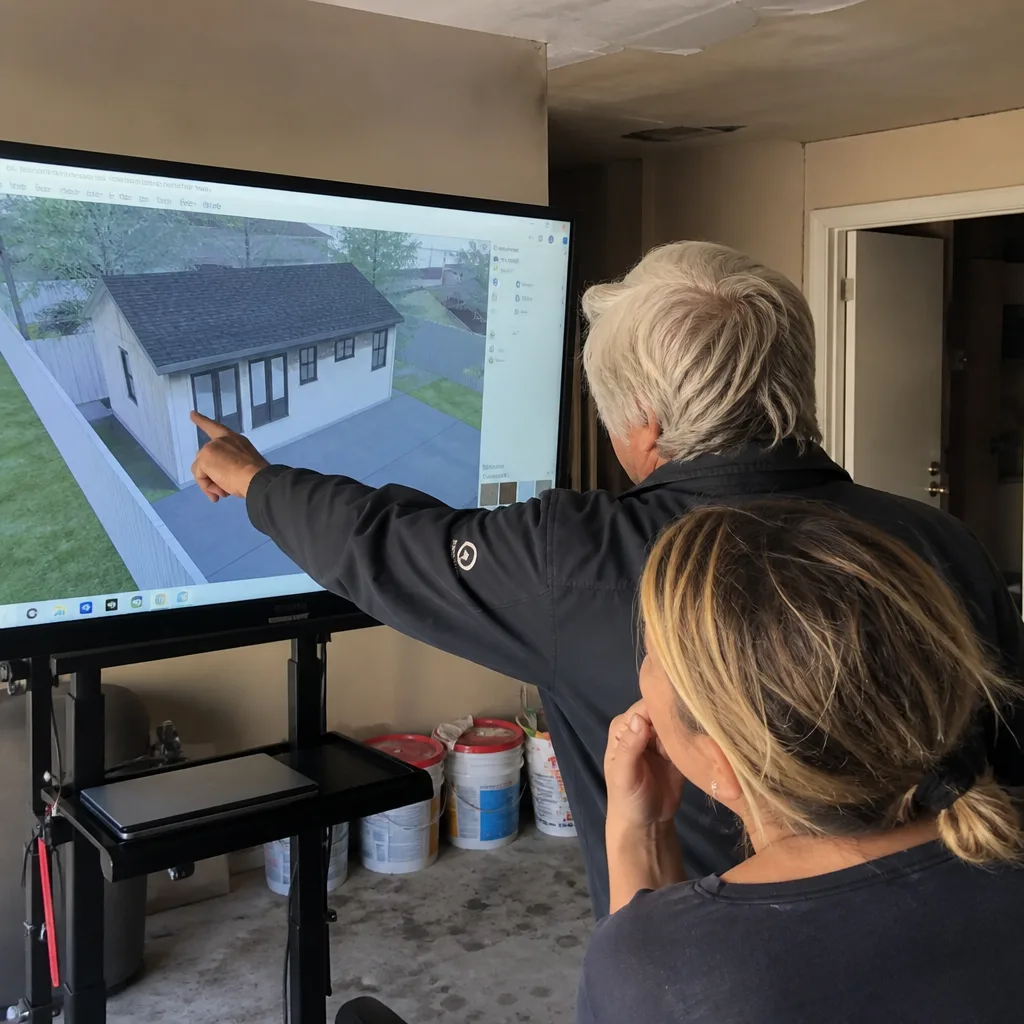
The way your contract is structured determines who pays when the drawings conflict with field conditions. This is not an abstract concern. In Hemet’s older neighborhoods - think the areas east of State Street or south of Florida Avenue - we regularly encounter unrecorded utility easements, undocumented septic systems, or slab thicknesses that vary from what a 1970s permit suggested. Someone has to absorb that cost. The contract structure decides who.
Design-Bid-Build: The Two-Contract Trap
In the traditional model, you hire an architect or designer under one contract, then put the completed drawings out to bid to contractors under a second contract. The problem: the designer’s incentive is to produce drawings that pass planning review, not drawings that anticipate every field condition a builder will face. The contractor’s incentive is to bid low to win, knowing that anything not explicitly drawn becomes a change order.
When the concrete crew discovers the existing garage slab is 3.5 inches instead of the 4 inches the structural engineer assumed, the designer says “the drawings were code-compliant.” The contractor says “the slab doesn’t meet the spec, that’s an extra $4,200 for reinforcement.” You pay twice: once for the design, again for the fix.
Design-Build: One Contract, One Price, One Throat to Choke
A design-build contract places design and construction under a single agreement at a single written price. The entity designing the ADU is the same entity building it. When field conditions differ from assumptions, there is no finger-pointing - the design-build studio absorbs the correction or explains why a change order is necessary, with documentation.
At Ellery ADU Studio, our ADU Design & Permitting in Hemet and construction services are governed by The Haven Standard. Under Clause 1, every project receives a written price before any work begins. Under Clause 5 (No Surprises), the scope is locked at signing; no door-side upsells, no scope creep. If the slab is thinner than expected, we documented it during our site evaluation and priced accordingly, or we correct it under our 365-Day Done Right Promise.
Five Contract Clauses That Separate Real Design-Build from Marketing Language
Some contractors use “design-build” as a marketing label while operating under two separate agreements. Demand these five clauses in writing:
- Single point of financial responsibility: One entity holds both the design contract and the construction contract. Not a “preferred partner” arrangement. Not a referral agreement. One invoice, one warranty, one license number.
- Design liability through construction completion: The contract states that design errors discovered during construction are the studio’s financial responsibility, not yours. This clause should survive permit approval - passing planning does not absolve the designer of buildability responsibility.
- Fixed price with defined exclusions: The written price includes a line-item scope of work and a specific list of what is excluded. “Allowances” are capped with overage protocols written in.
- Permit set as deliverable, not afterthought: The contract specifies the permit set format (typically 24″ x 36″ sheets, PDF, and digital submittal package), the number of revision rounds included, and who pays for revisions triggered by city corrections.
- Correction warranty with defined trigger and remedy: The contract defines “done right” with reference to the permitted drawings and specifies the remedy timeline. Our 365-Day Done Right Promise states: if the finished ADU is not built to the permitted drawings, Ellery makes it right - in writing, before the project starts.
How to Read a Hemet ADU Bid for Hidden Exclusions
ADU bids in Hemet range widely - we’ve seen garage conversion proposals from $85,000 to $160,000 and new detached ADUs from $180,000 to $340,000 - but the sticker price rarely tells the full story. For a detailed breakdown, see our ADU Cost Breakdown: The Hemet Homeowner’s Reference for 2026. The critical skill is reading the exclusions, the allowances, and the line items that appear on some bids but not others. Here’s what to look for.
The Exclusions That Convert a $180,000 Bid to $215,000
These items are legitimate costs of ADU construction. If they are not in the bid, they will appear later, or your project will stall when the city or utility requires them. Check for each:
| Line Item | Typical Hemet Range | Why It Gets Excluded |
|---|---|---|
| Water meter upgrade (5/8″ to 1″) | $3,500 - $6,000 | Older Hemet homes often have undersized meters; Western Municipal Water District requires upgrade for ADU |
| Utility trenching (electrical/gas/water) | $4,000 - $12,000 | Distance from main house to ADU varies; rocky soil in Hemet’s hillside areas increases cost |
| Soils report / geotechnical investigation | $2,500 - $5,000 | Required for new detached ADUs on slopes or expansive clay; often omitted from initial bids |
| Title 24 energy calculations | $800 - $1,500 | Mandatory for all California ADUs; some bids bury this in “permit fees” without specifying |
| Fire sprinkler system | $4,000 - $8,000 | Required when main house has sprinklers; Hemet Fire Department enforces this strictly |
| Sewer lateral replacement or septic | $3,000 - $15,000 | Hemet’s older neighborhoods may lack sewer connections; septic capacity must be verified |
| Tree protection / removal permits | $500 - $3,000 | Protected species or heritage trees in established Hemet neighborhoods trigger city arborist review |
A bid that excludes more than two of these items is not comparable to a bid that includes them. Demand an “all-in” price or a written maximum for each exclusion.
Allowances: The Other Hidden Cost
Many Hemet ADU bids include “allowances” for finishes - flooring, countertops, fixtures - set at builder-grade levels. The problem arises when you select mid-grade materials and the allowance covers 60% of the actual cost. The difference is your change order.
Under Haven Standard Clause 1, Ellery ADU Studio specifies every allowance with a product-level description and a cap. If you select above the allowance, you know the exact overage before ordering. There is no surprise at the cabinet install.
How to Compare Apples to Apples
Request each bidder provide their proposal in these categories:
- Pre-construction: design, permitting, soils, surveys
- Site work: demolition, grading, trenching, utilities
- Foundation and structure: slab, framing, roofing
- Mechanical, electrical, plumbing (MEP)
- Finishes: flooring, cabinets, countertops, fixtures, paint
- Exterior: siding, windows, doors, hardscaping
- Contingency (should be 5-10% for ground-up construction, 3-5% for conversions)
A bid without this breakdown is a bid you cannot evaluate. Walk away.
ADU-Specific Reference Check Questions Most Homeowners Forget
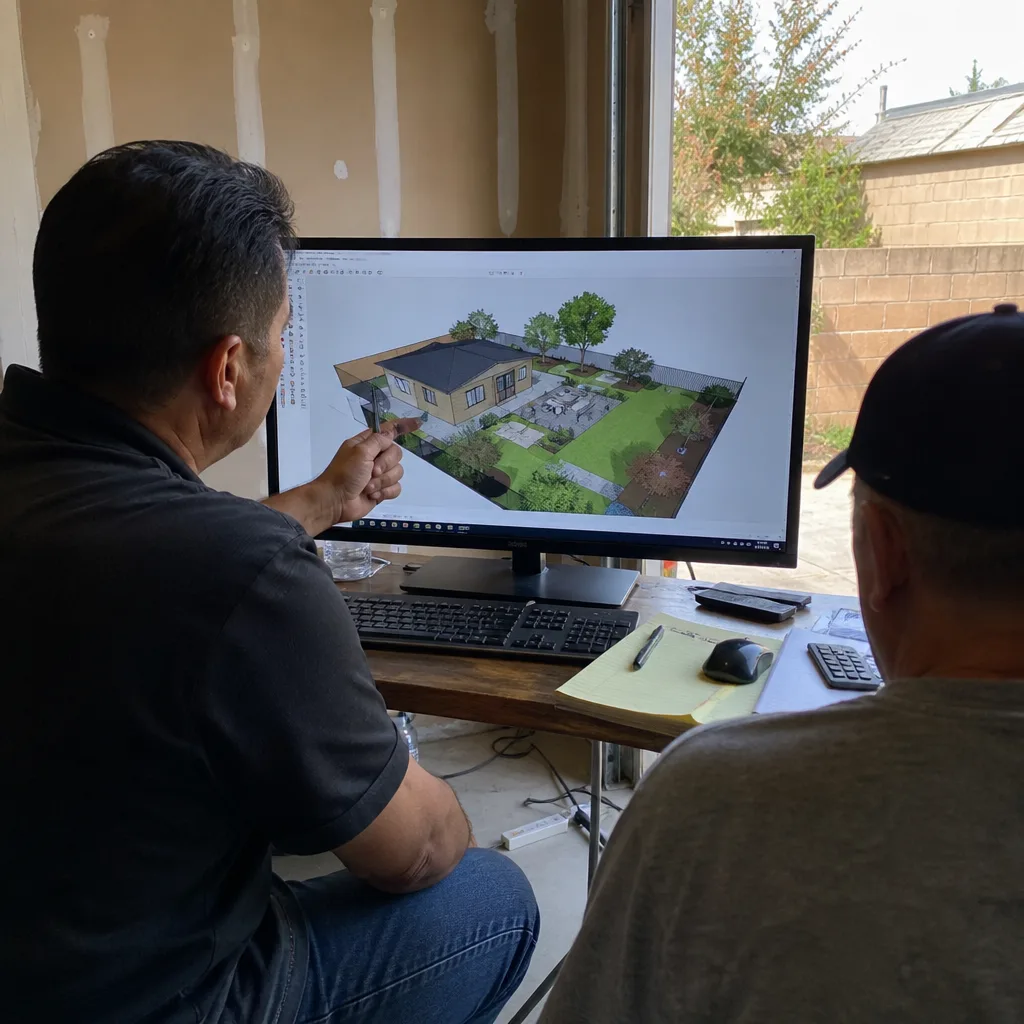
Generic contractor reference checks ask about timeliness and cleanliness. For an ADU - a project involving planning approval, building permits, multiple inspections, and utility coordination - you need ADU-specific verification. Here’s what to ask and how to verify the answers independently.
Questions for the Contractor’s References
- “Can you send me your permit application and the final certificate of occupancy?” This verifies the project was permitted and completed, not just that construction happened. A reference who cannot produce these documents may have built an unpermitted structure.
- “How many inspection corrections did your project require, and who paid for the re-inspection fees?” In Hemet, re-inspection fees are $150-$300 per visit. A contractor with a pattern of multiple correction cycles is either sloppy or unfamiliar with current code. At Ellery, we track our inspection correction rate and share it on request.
- “Did the final price match the written proposal, and if not, what changed?” Listen for “we decided to upgrade” versus “the contractor found something he didn’t include.” The first is a choice; the second is a scope gap.
- “How long did permitting take, and did the contractor handle resubmittals?” Hemet’s Planning Division typically processes ADU applications in 60-90 days under state streamlining, but corrections can add 30-60 days. A contractor who blames “the city is slow” for every delay may be submitting incomplete packages.
- “Would you hire this contractor for a second ADU?” The most revealing question. Enthusiasm or hesitation speaks louder than any star rating.
Independent Verification at City of Hemet
You do not need to rely solely on the contractor’s word. Submit a public records request to City of Hemet Building Division for permits pulled under the contractor’s license number. Request:
- Permit application dates and final inspection dates (shows actual timeline, not promised timeline)
- Number of correction notices issued (shows quality of initial submittals)
- Whether permits were pulled under the contractor’s license or a subcontractor’s (red flag if the prime contractor lacks the license to pull their own permits)
This verification costs nothing and takes 5-10 business days. It is the single most underutilized tool in ADU contractor vetting.
Red Flags in ADU Contractor Proposals
Some warning signs are obvious: no license, no insurance, pressure to sign immediately. Others are specific to ADU work and easy to miss if you have not built one before. Watch for these.
Unlicensed Design Partners
A contractor who says “we have a designer we work with” but cannot produce that designer’s California architectural license (for projects requiring stamped drawings) or CSLB classification is proposing an illegal arrangement. In California, anyone who prepares plans for others must be licensed unless the project falls under specific exemptions. For ADUs over 120 square feet with electrical or plumbing, you need a licensed professional. A contractor who winks at this requirement will likely wink at others.
Permits Pulled Under a Subcontractor’s License
If the contractor’s name does not appear on the permit, they are not the responsible party. This matters for warranty enforcement and CSLB complaint jurisdiction. At Garage Conversion ADU in Hemet projects, we pull every permit under our own B-General Building license. The permit record matches the contract. This alignment is basic, but surprisingly uncommon.
Lump-Sum Bids with No Itemized Scope
“$145,000 for complete ADU” tells you nothing about what is included. Is the kitchenette appliance package a $400 mini-fridge or a $2,200 full-size refrigerator? Is the flooring LVP at $3/sf or tile at $12/sf? Without line items, you cannot compare bids, track progress payments, or verify that materials installed match what was priced.
Verbal Promises Not in Writing
“Don’t worry, we’ll handle the tree” or “the city usually waives that” are not contract terms. If it is not in the written scope with a price or a clear exclusion, it does not exist. Haven Standard Clause 1 exists precisely because we have seen too many Hemet homeowners burned by handshake assurances that evaporated when the project got hard.
No Defined Permit Set Deliverable
A contractor who treats the permit set as a formality - “we’ll get it through, don’t worry about the details” - does not understand that the permit set is the legal definition of what will be built. Review our ADU Design & Permitting Maintenance Checklist for Hemet Homeowners to understand what your permit set should include. At Ellery, clients receive their complete permit set in PDF and printed format before construction begins. You can compare every wall, outlet, and window against what is built. That documentation is your protection.
When Prefab or Modular Makes Sense for Hemet Properties
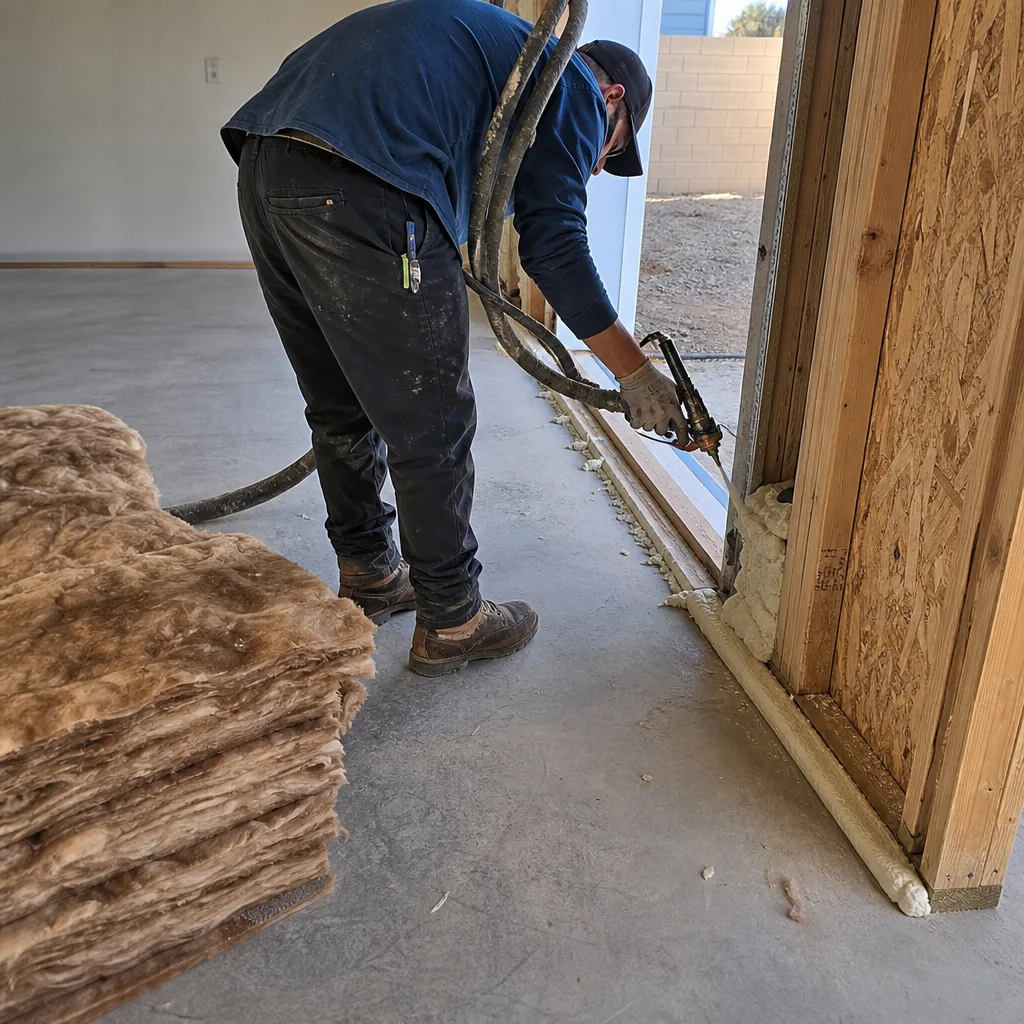
Not every Hemet ADU needs to be stick-built on site. Prefab and modular systems from brands like Abodu, Cover, and Dvele can compress the construction timeline and reduce weather delays, which matters in Hemet’s summer heat when concrete curing and worker safety become genuine constraints. But prefab is not a universal solution. Here’s how to evaluate it.
Site Conditions That Favor Prefab
- Flat, accessible lot with 12+ feet of clear width for crane or truck delivery
- Standard setback compliance without variance requests
- Utility connections within 50 feet of the module placement
- No overhead power lines obstructing crane operation (common in older Hemet neighborhoods with alley access)
Site Conditions That Favor Site-Built
- Sloped lot requiring stepped foundation or retaining walls
- Tight access between existing structures or mature trees
- Custom footprint to maximize a non-rectangular buildable area
- Integration with existing hardscaping or pool equipment that modular placement would disrupt
At Ellery ADU Studio, we specify and coordinate prefab and modular systems from Abodu, Cover, Dvele, Mighty Buildings, and other manufacturers within the same single contract as our site-built work. The evaluation is part of our initial site assessment, not an afterthought. If prefab saves eight weeks and $15,000 on your Hemet property, we will show you the comparison in writing. If site-built yields more square footage within your setback envelope, we will show you that too.
The key point: do not hire a contractor who only builds one way. Their solution will match their capability, not your site.
Navigating Hemet Permits and Inspections
Hemet operates under California’s statewide ADU streamlining laws (Government Code 65852.2), which mandate ministerial approval - meaning the city cannot subject ADUs to discretionary review or impose parking requirements beyond what state law allows. But ministerial does not mean automatic. Understanding Hemet’s specific process prevents delays.
Hemet’s ADU Permit Process
- Pre-application meeting (recommended): Hemet Planning offers a free pre-application conference to review site constraints. We attend these with our clients to identify utility access issues or setback questions before design begins.
- Planning review: 60-day statutory clock begins upon complete application. Incomplete packages are returned without starting the clock. Our New Detached ADU in Hemet permit sets include a completeness checklist to avoid this delay.
- Building permit issuance: After planning approval, building plans undergo structural, mechanical, electrical, and plumbing review. Hemet contracts with Riverside County for some plan check services, which can add 2-4 weeks.
- Construction and inspections: Typical inspection sequence: foundation/under-slab, rough framing, rough MEP, insulation, drywall, final. Each requires 24-48 hour notice and passes only when code-compliant.
- Certificate of occupancy: Final inspection approval plus any required utility sign-offs.
Hemet-Specific Considerations
Hemet’s climate and geography create specific code triggers. Summer temperatures regularly exceed 100°F, triggering enhanced Title 24 cool roof requirements. See our Seasonal ADU Care for Hemet: Year-Round Homeowner’s Guide for how these conditions affect ongoing maintenance. The city’s location on the San Jacinto fault zone means seismic detailing for detached ADUs is scrutinized closely. And in neighborhoods with septic systems rather than sewer connection - still common in outlying areas of Hemet - septic capacity verification by Riverside County Environmental Health is a parallel track that can add 4-6 weeks if not started early.
A contractor unfamiliar with these Hemet-specific requirements will discover them mid-project. A design-build studio with local permit history prices them from the start.
Common Mistakes to Avoid
- Interviewing designers and contractors separately. This nearly guarantees a scope gap. The designer draws to code minimum; the contractor bids to the drawing without field verification. Hire a single entity responsible for both, or hire them under a unified agreement with defined liability handoffs.
- Accepting the lowest bid without exclusion analysis. A $165,000 bid that excludes water meter upgrade, trenching, and Title 24 calculations is not cheaper than a $185,000 bid that includes them. It is simply less honest.
- Starting design before confirming utility capacity. Western Municipal Water District and Southern California Edison both have ADU-specific service requirements. A beautiful design for a 1,200 square foot ADU is worthless if the electrical service is only 100 amps and the water meter is 5/8 inch.
- Neglecting the photo record. Every site visit should produce dated, geotagged documentation of conditions found and work performed. Without it, disputes about pre-existing cracks, buried utilities, or completed work become unwinnable. Ellery provides this on every visit; demand it from any contractor you consider.
- Signing without a written correction warranty. “We’ll take care of it” is not enforceable. The 365-Day Done Right Promise specifies the standard (permitted drawings), the remedy timeline, and the process. Anything less leaves you with recourse only through litigation.
- Assuming prefab is always faster. Factory construction is faster than site-built framing, but shipping, crane scheduling, and utility connection can erase that advantage. Evaluate total timeline, not just construction phase.
- Failing to verify permit closure. Some contractors complete construction but never schedule final inspection, leaving you with an unpermitted ADU that complicates refinancing or sale. Verify certificate of occupancy before final payment.
When to Call a Professional
Call a design-build ADU studio when you have confirmed your property’s basic eligibility - roughly level buildable area, no obvious utility constraints, and a clear use case (rental income, family housing, home office conversion). Earlier than that, you are paying for feasibility work you could research yourself. Later than that, you risk designing something unbuildable or unpermitted.
Specific scenarios that warrant immediate professional consultation: properties with septic systems, sloped lots requiring grading, existing structures in questionable structural condition, or any situation where the ADU will require a setback variance or utility main upgrade. These constraints do not rule out ADU construction, but they require early integration of design, engineering, and permit strategy.
Ellery ADU Studio Hemet offers free estimates in Hemet - call (951) 430-0167. We also provide a Free Second Opinion on any written estimate already in hand, with no obligation. Bring us your bid; we will show you the exclusions, the allowances, and the questions to ask before you sign.
Frequently Asked Questions
Garage conversion ADUs in Hemet typically run $85,000-$160,000 all-in, drawings through final inspection, while new detached ADUs range from $180,000-$340,000 depending on size, finishes, and site conditions. The critical factor is whether the bid includes utility upgrades, soils work, and permit fees, or treats them as exclusions. Call (951) 430-0167 for an exact quote on your property - estimates are free, and every project receives a written price before any work begins under Haven Standard Clause 1.
From permit application to certificate of occupancy, most Hemet ADU projects take 8-14 months: 2-4 months for design and permitting, 4-8 months for construction, plus 2-4 weeks for final inspections and utility sign-offs. Prefab systems can compress the construction phase by 30-60 days if site access permits crane delivery. Timeline extends for septic systems, slope work, or correction cycles from incomplete initial submittals.
Yes. The prime contractor must hold a B-General Building license from the CSLB. Specialty contractors (C-36 Plumbing, C-10 Electrical, C-20 HVAC) may perform their trade work but cannot serve as the responsible contractor for the complete project. Verify the license at cslb.ca.gov and confirm the contractor has pulled ADU permits in Hemet or Riverside County, not just residential remodels.
Under a properly structured design-build contract with defined exclusions, the price should not change unless you request upgrades or unforeseen conditions explicitly excluded in the agreement. Haven Standard Clause 5 locks the scope at signing; changes require written change orders with pricing before work proceeds. Beware any contractor who presents a “not-to-exceed” number without itemized exclusions - this is not a fixed price.
Ellery ADU Studio pulls every permit under our own B-General Building license as part of our single-contract service. The permit record matches our license number and our insurance. Some contractors ask homeowners to pull permits as “owner-builder,” which transfers liability to you and voids many contractor warranty provisions. Others pull permits under a subcontractor’s license, which obscures responsibility. Demand clarity in writing.
California state law allows ADUs on any residentially zoned lot with an existing single-family or multifamily dwelling, but Hemet’s specific constraints include: minimum lot size (varies by zone), setback requirements (typically 4 feet side and rear for detached ADUs), and utility capacity. Properties in the hillside overlay or with septic systems face additional requirements. A site-specific evaluation - which Ellery provides at no charge - confirms eligibility before design investment.
The Bottom Line
Hiring an ADU contractor in Hemet is not about finding the lowest bid or the fastest timeline. It is about finding a single entity willing to put in writing that they are responsible for the design, the permit, and the construction at one defined price, with a defined remedy if the result does not match the drawings. Verify the license independently. Read the exclusions carefully. Ask reference questions specific to ADU permitting. And never sign a contract that splits design and build into separate agreements without a clear liability bridge. The homeowners who get this right watch their projects finish on budget and pass final inspection the first time. The ones who don’t spend their second year in litigation or change-order negotiations.
Written by Nadia Ellery, Owner at Ellery ADU Studio Hemet, serving Hemet since 2015.